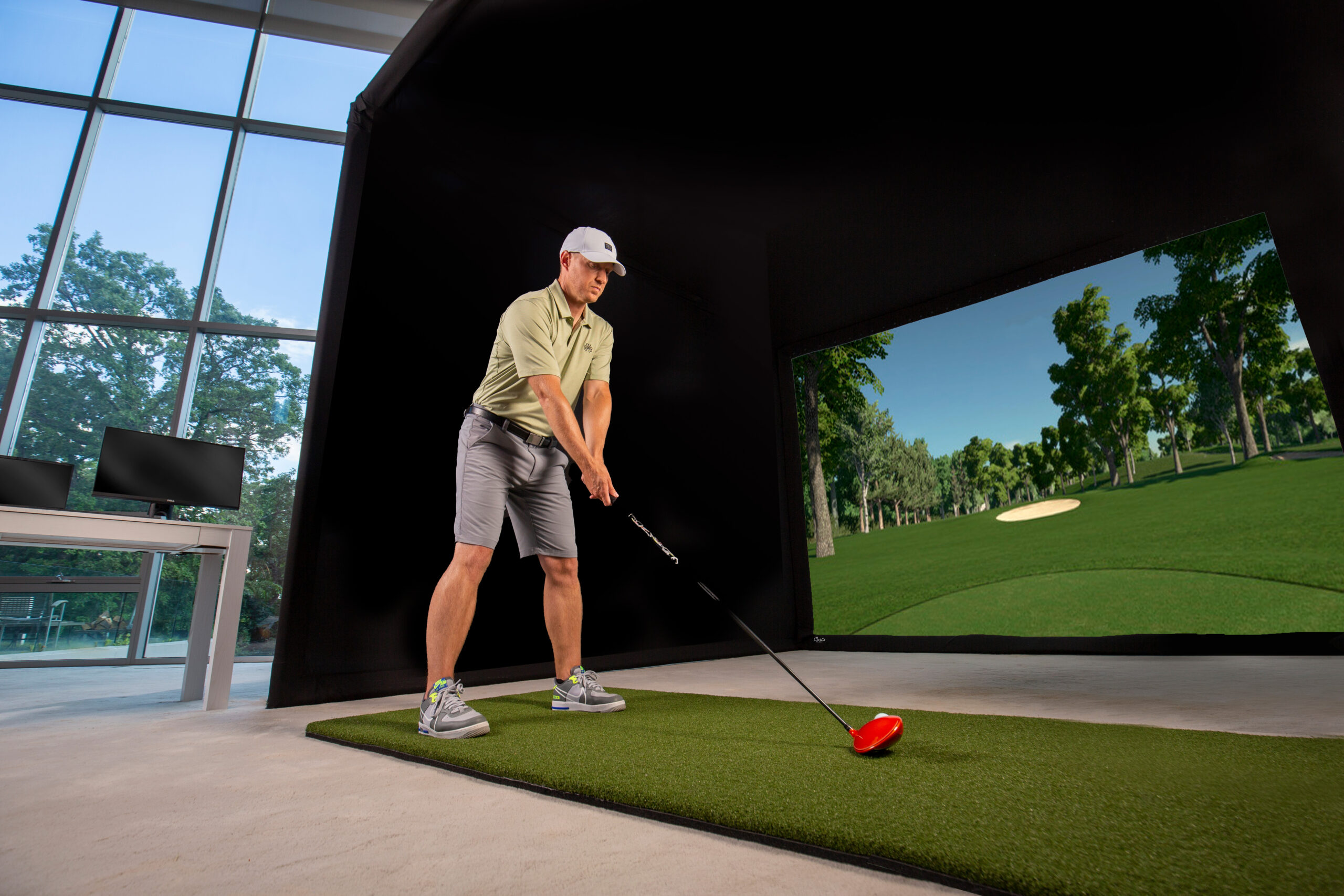
A golf practice space at home can make year-round practice easier, but the best setups start with planning rather than equipment shopping. Before choosing a launch monitor, screen, mat or projector, confirm the room dimensions, safety needs and type of practice you actually want.
Start with space and safety
The first question is whether the room can safely handle a full swing. Ceiling height, depth, width, wall protection and ball containment all matter. A good home golf simulator plan starts with the space, then works backward to equipment.
Golfers should also think about who will use the room. A scratch player working on driver may need a different build than a family that mainly wants casual indoor golf and wedge practice.
- Ceiling height for the tallest golfer and longest club
- Room depth for hitting distance and screen placement
- Side clearance for right- and left-handed players
- Impact screen, enclosure and wall protection
- Flooring, hitting mat and ball return space
Choose technology around your goals
A golf practice space at home can be simple or advanced. Some golfers need basic net practice. Others want launch data, course simulation, video, club fitting feedback or a polished room for family use.
If you already use TrackMan simulator bays at Jess Hansen Golf Academy, that experience can help you decide which features matter most at home.
Plan for installation and future use
A simulator room should be comfortable enough to use consistently. Lighting, projector placement, screen durability, power access and sound should be part of the plan. So should maintenance, software subscriptions and future upgrades.
Golfers who are also considering new clubs can pair home practice planning with Mizuno custom fitting so the equipment and practice environment support the same goals.
How to get more value from golf practice space at home
The most useful way to apply this advice is to make the next practice session specific. Choose one goal before you start, write down the result, and avoid changing several things at once. That simple process helps a golfer know whether the work is improving contact, direction, distance control or confidence.
At Jess Hansen Golf Academy, golf practice space at home should connect instruction to action. A golfer can take one lesson priority into a TrackMan bay, repeat it during independent practice, and then bring the results back to an instructor. That cycle is more useful than chasing a new tip every time the ball flight changes.
For outside context on simulator technology, TrackMan explains indoor golf simulation and how launch-monitor feedback supports structured practice.
A useful checkpoint is to review the last ten shots, not just the best one. Patterns over a small group of swings give the instructor and golfer a better signal than one perfect result, especially when the goal is steady improvement instead of a quick tip.
If you are comparing lesson options, consider your current problem first. A recurring miss may need private instruction. A new golfer may prefer a class. A player who already has a plan may only need simulator practice time to measure progress.
Next step
To discuss a golf practice space at home, start with the home simulator page or contact Jess Hansen Golf Academy for guidance.
FAQ: golf practice space at home
How much room do I need for a golf practice space at home?
Room needs depend on the golfer, club length and simulator equipment. Confirm ceiling height, width and depth before buying screens or launch monitors.
Should I buy equipment before planning the room?
No. Plan the space and safety requirements first, then choose technology that fits the room and your practice goals.
Can Jess Hansen Golf Academy help with home simulator planning?
The academy has a home simulator service page and can help golfers think through simulator goals, practice needs and equipment considerations.